
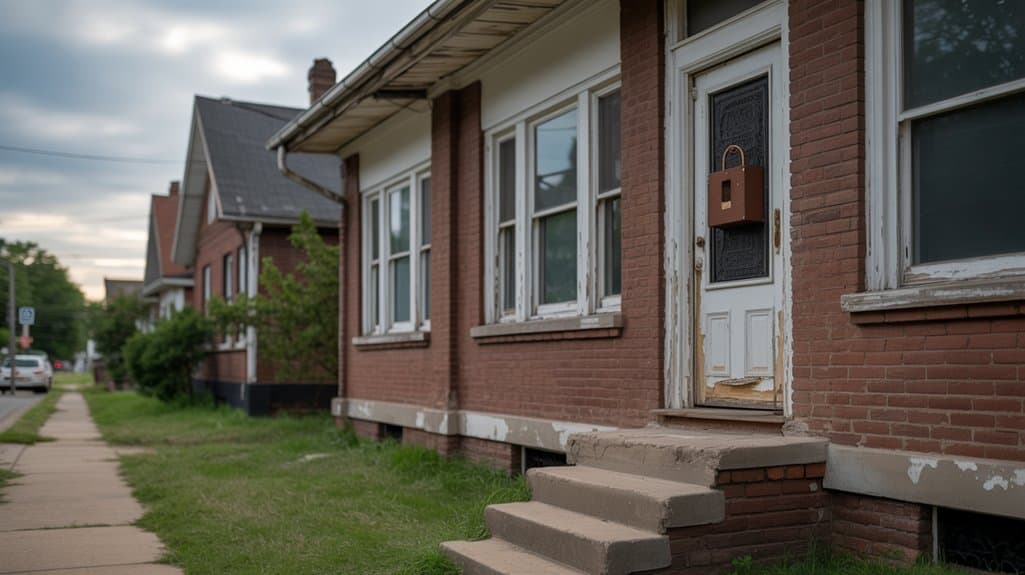
When you sell your house as-is in Birmingham, you're signaling no seller-funded repairs - but you're not escaping Alabama's disclosure obligations. You must still reveal known defects that affect health, safety, or material value. Known title encumbrances, liens, and code violations also require disclosure before closing. Cash buyers typically offer 75-85% of market value after factoring repair costs. If you want to protect yourself legally and maximize your net proceeds, there's considerably more you'll need to know.
Key Points
- Selling as-is in Birmingham means no seller-funded repairs, but Alabama law still requires disclosing known latent defects affecting value or safety.
- Alabama's caveat emptor doctrine shifts most defect-discovery responsibility to buyers, except for known health or safety hazards.
- Cash buyers typically offer 75-85% of market value, deducting estimated repair costs, holding costs, and a required profit margin.
- Title issues, probate complications, and outstanding liens must be resolved before closing, as they reduce offers and delay transactions.
- Pre-1978 Birmingham homes require federal lead-based paint disclosures regardless of as-is status or sale type.
What Selling As-Is Actually Means in Real Estate
Listing your home as-is tells buyers you won't make repairs, but it doesn't erase every legal obligation you have as a seller. Alabama follows caveat emptor, which shifts the burden of uncovering onto the buyer, yet you're still required to disclose known defects that pose a health or safety risk, answer direct buyer questions truthfully, and comply with federal lead paint disclosure rules. Understanding exactly where your protection ends and your liability begins is the first thing you need to get clear on before you proceed.
What As-Is Does and Does Not Protect You From
Selling your home as-is sets the condition of the sale, not your legal obligations as a seller. It tells buyers you won't make repairs, but it doesn't eliminate your duty to disclose known material defects. Alabama follows caveat emptor, which shifts buyer liability for uncovering most defects, but that rule has exceptions. If you know about a structural problem, mold, or a health and safety risk that isn't visible, you're still required to disclose it. Lying or staying silent when a buyer directly asks about a specific defect can expose you to fraud or misrepresentation claims. Disclosure limits exist, but they don't cover concealment. As-is protects you from repair demands, not from the legal consequences of knowingly withholding information.
What Alabama Sellers Must Still Disclose When Selling As-Is
Even though Alabama follows caveat emptor, marking your home as-is does not erase your disclosure obligations. You must still disclose known latent defects that materially affect the property's value or safety. Staying silent on those issues can expose you to fraud or misrepresentation claims regardless of how your listing is labeled.
Beyond physical condition, you're required to disclose known title encumbrances such as liens or mortgages that could prevent a clean transfer. If your property has unpermitted additions, active code violations, or structural problems like foundation cracks or roof leaks, buyers and their insurers need that information because it directly affects habitability and insurability.
If you're selling inherited property, probate disclosures matter too. You'll need to identify the probate status, all heirs involved, and any disputes that could cloud title. Buyers and title insurers require marketable title, and unresolved probate issues can kill a deal at closing.
Repairs Required by Law Before Selling in Alabama
Alabama does not require you to make general repairs before selling a house as-is, but that rule has limits. If your municipality has issued municipal citations for electrical, plumbing, or structural hazards, those violations can block closing or cause a title insurer to deny coverage. You'll need to resolve them or negotiate how they're handled before you transfer title.
Tax liens and code-enforcement liens attached to the property must also be cleared before closing. A buyer cannot receive clean title while those encumbrances persist on record.
If your home was built before 1978, federal law requires you to provide buyers with the EPA/HUD lead-based paint disclosure and any existing reports, even in a strict as-is sale.
None of these obligations require you to renovate. They require you to clear legal encumbrances and satisfy federal disclosure mandates before the transaction closes.
Need to Sell? Get a Cash Offer for Selling a House As-Is in Birmingham
Sell My House Fast Birmingham works directly with homeowners throughout the Birmingham metro. No repairs, no commissions, and we can close on your timeline.
Get a No-Obligation Cash OfferHow Much Less Will You Get Selling As-Is
Once you know what you're legally required to handle, the next question is practical: how much will selling as-is actually cost you with respect to sale price?
Most as-is sales in Birmingham net 70 to 90 percent of a fully repaired sale price. Cash buyers typically offer 75 to 85 percent of estimated market value, factoring in repair costs, holding periods, and closing timelines. Homes needing major structural, HVAC, or roof work often see discounts of $10,000 to $40,000 or more.
Market psychology matters here. Buyers price in risk, not just repair costs. Title complications, probate delays, or multiple heirs can trigger an additional 5 to 15 percent reduction.
Timing strategies affect your net too. You avoid agent commissions of 5 to 6 percent and seller-paid closing costs, which partially offset the as-is discount. Run both scenarios side by side before deciding which path makes financial sense.
Should You Make Repairs or Sell As-Is: A Decision Framework
Deciding whether to repair or sell as-is comes down to three variables: your timeline, your available cash, and the nature of the defects. Your risk tolerance and market timing both factor into which path makes financial sense.
| Your Situation | Better Choice |
|---|---|
| Need to sell fast | Sell as-is to a cash buyer |
| Have time and cash for repairs | Fix up, then list |
| Major structural or foundation issues | Sell as-is |
| Minor cosmetic issues only | Cosmetic staging, then list |
Foundation problems and major structural defects rarely return their repair cost and actively damage buyer psychology, pushing financed buyers away entirely. Lenders routinely decline properties with unresolved structural issues, which shrinks your buyer pool to cash purchasers anyway. If your defects are cosmetic, light staging can recover value. If they're structural, selling as-is is typically the more rational financial decision.
Selling As-Is With a Real Estate Agent
If you've decided that selling as-is makes sense but you're not ready to skip the open market, listing with a Birmingham real estate agent is one path forward. Your agent selection matters here because not every agent has experience pricing distressed properties or executing a marketing strategy aimed at cash and investor buyers.
Listing as-is on the MLS exposes your property to a broader buyer pool, but it does not eliminate inspection contingencies. Buyers can still request repairs or credits after their inspection, which shifts negotiation leverage back to them. Expect pricing roughly 10 to 25 percent below comparable repaired homes.
Alabama's caveat emptor rule does not eliminate your disclosure obligations. You must disclose known defects that pose health or safety risks and answer buyer questions truthfully. You'll also pay agent commissions, typically 5 to 6 percent combined, plus any negotiated repair credits at closing.
Selling As-Is to a Cash Home Buyer
When you contact a cash home buyer, they'll assess your property based on three main factors: location, current market conditions, and the cost of repairs needed to bring the home up to resale value. They're not evaluating your home the way a retail buyer would; they're running numbers to determine what they can pay, cover in rehab costs, and still turn a profit when they sell. Understanding how that math works helps you evaluate whether an offer is reasonable before you sign anything.
How Cash Buyers Evaluate an As-Is Home
Cash buyers size up an as-is home by working backward from what the property will likely be worth after repairs. That figure, called the after-repair value, anchors the entire cash appraisal. From there, they subtract estimated repair costs, closing costs they will absorb, holding costs, and their required profit margin. What is left is your offer.
Understanding buyer psychology here matters. The cash buyer is not emotional about the property. Every cracked foundation wall, aging roof, and broken HVAC unit translates directly into a dollar deduction. They will walk through your home, estimate contractor costs, and run comparable Birmingham sales before committing to a number.
Any outstanding liens, unresolved title issues, or probate complications reduce your net proceeds further or delay closing until those encumbrances are cleared.
Common As-Is Problems and What They Cost to Fix
Most Birmingham homes sold as-is carry at least one significant defect that drove the decision to sell without repairs in the first place. The most common problems fall into three categories: roof and structural systems, water intrusion and mold, and foundation movement - each carrying repair costs that can run well into five figures. Understanding what these repairs actually cost gives you a clearer picture of how a cash buyer calculates an offer and why the discount from retail value is usually proportional to the work required.
Roof, HVAC, and Electrical Issues
Three repair categories show up in nearly every as-is negotiation in Birmingham: the roof, the HVAC system, and the electrical panel. A roof replacement on a typical Birmingham home runs $7,000 to $15,000, and buyers will scrutinize shingle warranties and roof ventilation to assess remaining useful life. Expect them to discount further if either is deficient. HVAC replacement averages $5,000 to $10,000, though targeted repairs can fall between $700 and $3,000. Electrical upgrades, particularly bringing a 60A panel to 200A service, cost $4,000 to $12,000. Cash buyers deduct estimated repair costs plus a 10 to 20 percent contingency from their offers. Gathering documented inspection estimates for all three systems before you negotiate gives you a factual basis to defend your asking price.
Water Damage and Mold
Roof and mechanical repairs are not the only costs that shrink your net proceeds. Water damage compounds quickly. Drywall replacement runs $1.50-$3.50 per square foot, subfloor repair $2-$7 per square foot, and mold remediation $500-$6,000 for moderate infestations, with extensive cases exceeding $10,000 when humidity control failures push spores into HVAC systems.
Cash buyers conducting moisture mapping and airflow assessment will price every finding against your offer. Hidden moisture detected through thermal imaging adds $300-$900 in testing costs before remediation even begins. Elevated spore counts on air sampling trigger mandatory disclosure under Alabama's caveat emptor exceptions, because known mold presenting a health or safety risk must be disclosed.
Expect buyers to deduct 10-30 percent of after-repair value when water or mold issues appear in their inspection findings.
Foundation Problems in Alabama's Clay Soil
Alabama's expansive clay soils shift with every wet and dry cycle, and that movement cracks foundations throughout the Birmingham metro. If your home shows cracks wider than one-quarter inch, sticking doors, sloping floors, or stair-step mortar cracks, you have visible defects you must disclose under Alabama's caveat emptor exceptions. Minor slabjacking runs around $3,000, but helical or push-pier underpinning to reach stable strata typically costs $10,000 to $30,000. Clay mitigation measures like regrading, French drains, and downspout extensions add another $1,500 to $6,000 and are often overlooked in as-is pricing. Cash buyers factor in repair estimates plus a 10 to 20 percent contingency. Seasonal monitoring logs documenting crack progression strengthen your disclosure position and help buyers understand the scope before they submit an offer.
Selling a Home With Code Violations or a Failed Inspection
Code violations and failed inspections do not prevent you from selling your Birmingham home, but they do affect how the sale unfolds. Unresolved municipal liens, active code enforcement orders, and documented structural or safety hazards will factor into every offer you receive. Buyers and title insurers treat outstanding violations as financial liabilities, and they price accordingly.
With a conventional financed sale, lenders may require repairs before closing or demand escrow holdbacks, which slows the process and reduces your net proceeds. Cash buyers work differently. They account for violations and repair costs in their offer upfront, then close without requiring you to fix anything first.
Your best move is to gather all documentation before soliciting offers: code citations, municipal work estimates, and any inspection reports. Transparency prevents last-minute price reductions at closing. Buyer inspections are typically waived in cash transactions, which removes one more variable from an already complicated sale.
How to Price an As-Is Home Correctly
Pricing an as-is home correctly starts with what comparable properties actually sold for, not what sellers hoped to get. Pull closed sales of as-is homes in your Birmingham neighborhood from the last three to six months, matching square footage and lot size as closely as possible. Pricing psychology matters here: buyers discount emotionally before they discount mathematically, so an overpriced as-is listing sits and accumulates stigma.
From your comp baseline, subtract verified repair estimates, typically $5,000 to $30,000 depending on condition, then apply a 5 to 10 percent investor discount covering carrying costs, risk, and resale margin. Factor in title or probate complications, which can reduce your buyer pool and lower offers by an additional 10 to 25 percent. Account for seasonal adjustments, since Birmingham's winter market sees less buyer activity, which can compress offers further. A broker price opinion or pre-listing appraisal confirms you're grounded in reality before you commit to a number.
The As-Is Sales Contract: What to Watch For
Once you've landed on a price, the contract language governs what you're actually agreeing to, and as-is sales have specific provisions you need to read closely before signing.
As-is means you won't make repairs, but it doesn't eliminate disclosure nuances under Alabama law. You must still disclose known defects that pose health or safety risks or that a buyer directly asks about.
Pay close attention to contingency negotiation. An as-is contract can still include financing or inspection contingencies. Removing both speeds closing and reduces the chance of post-contract disputes, but that's a negotiated decision, not an automatic one.
Confirm in writing who covers closing costs and prorations. Many cash buyers absorb these, but standard contract forms leave them negotiable.
Make sure the contract includes explicit "sold as-is, where-is, with all faults" language and a buyer waiver of future claims. If probate, co-owners, or liens are involved, consult an Alabama attorney before signing.
How Sell My House Fast Birmingham Buys Houses As-Is
Sell My House Fast Birmingham cuts through the usual friction of an as-is sale by making a direct cash offer with no inspection contingency, no agent commissions, and no repair demands. You receive cash offers within 24 to 48 hours of submitting your property details, with no obligation to accept.
If you accept, the transaction moves to a quick closing on a timeline you control, typically within seven days. Because no lender is involved, the sale is not subject to financing contingencies, appraisal requirements, or underwriting delays that routinely derail conventional as-is transactions.
Sell My House Fast Birmingham purchases homes across Birmingham and Jefferson County in any condition, including properties with foundation damage, roof failure, water intrusion, or fire damage. They cover closing costs and require no cleaning or repairs. You sign, close, and receive your proceeds without the contractual complexity of a traditional sale.
Need to Sell? Get a Cash Offer for Selling a House As-Is in Birmingham
Sell My House Fast Birmingham works directly with homeowners throughout the Birmingham metro. No repairs, no commissions, and we can close on your timeline.
Get a No-Obligation Cash OfferFrequently Asked Questions
Does as-is mean no disclosures?
No. Alabama follows caveat emptor, but you must still disclose known defects that pose health or safety risks and answer buyer questions truthfully.
How does pricing work?
Offers reflect comparable market value minus anticipated repair costs and outstanding liens.
What about inheritance complications?
If the property persists in the deceased's name, title requires probate, an affidavit of heirship, or all heirs' signatures before closing.
Are disclosure timelines fixed?
No statutory deadline governs as-is cash sales in Alabama, but documenting delivery in writing protects you.
What do you net?
Gross offer minus mortgages, unpaid taxes, and any continuing liens.